
Modems and Not Modems

The Psychedelic Furs - Heartbreak Beat
I'm wondering if I shouldn't have a bench power supply for this, but I have a couple of USRobotics modems and the power supplies are way different, like I think one is 19V something. I guess I just have to try them both on the smaller one and hope for the best? Neither one has any external indicator of what voltage they want even though the courier has a full printed summary of all the AT commands and detailed DIP switch settings. All of which is helpful, but how the fuck many Juice do you want coming in this hole right here? Center positive, presumably?
Since Couriers were used by BBS people and businesses and ISPs that could have dozens of modems of a few models and brands so it was good to have this switch info and stuff at-a-glance:
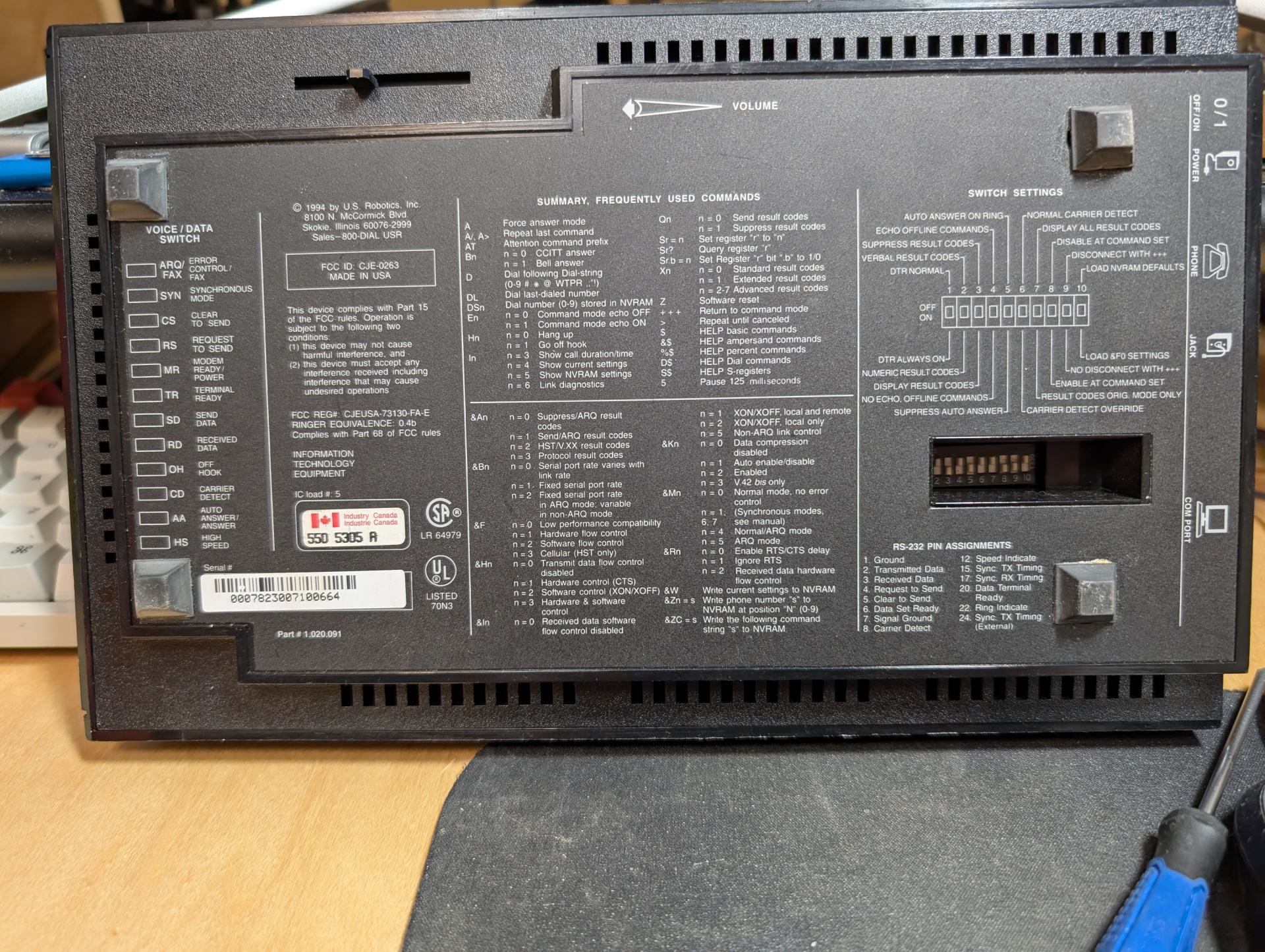
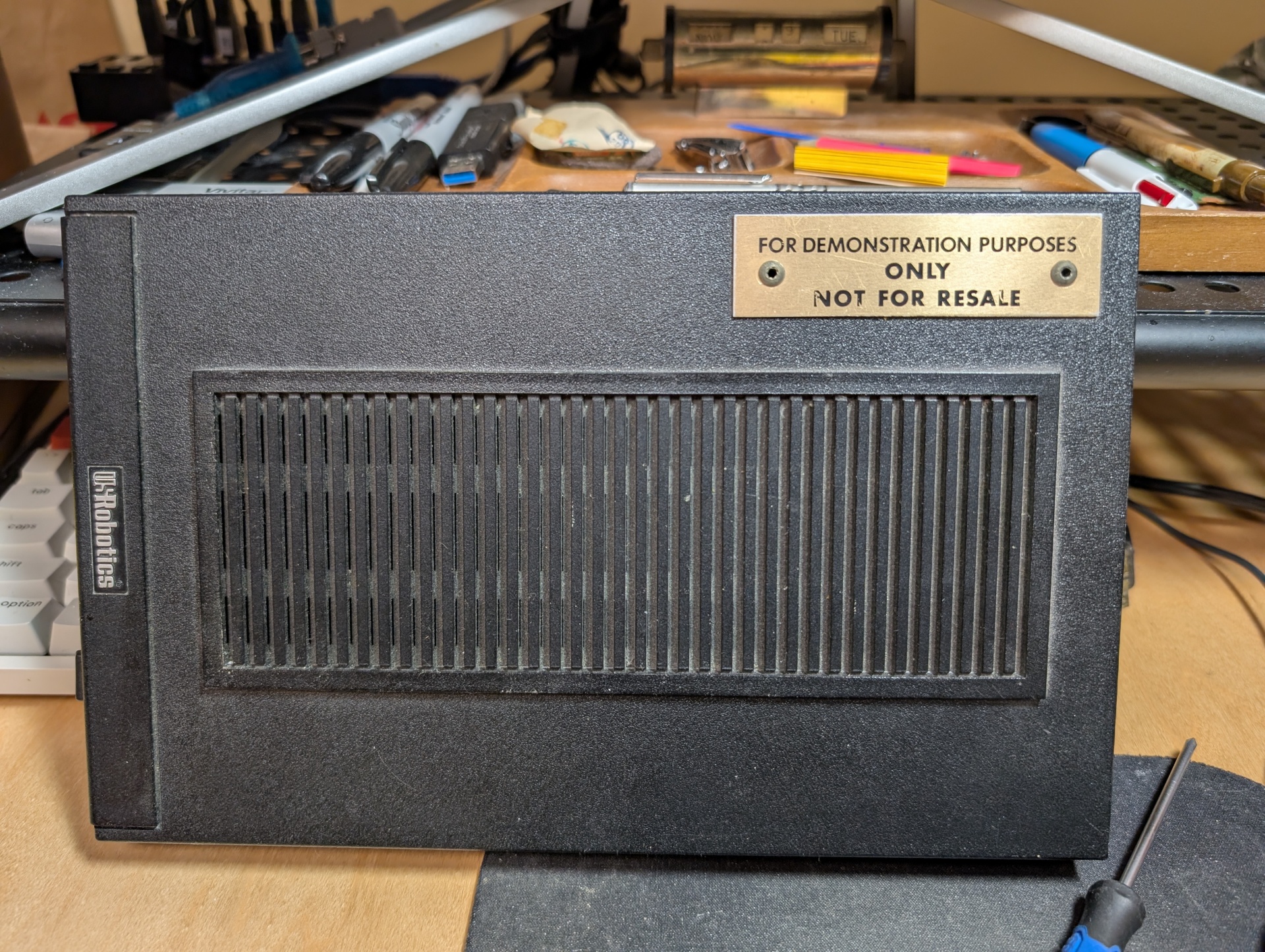
I'd sort of like to get my Courier v.Everything running as a BBS on DOS 6.22 and then be able to dial into from other machines using all these other modems, just serial to serial with AT commands at first, then investigate like Asterix or whatever? Is any of this worth that level of bother?
I have kind of a few devices from a couple of generations, and the "Good" Professional vs. Consumer models of each genration. The Supra Modem and Courier in the middle are 14.4 v.32bis. I don't think that courier supports HST 16.8:
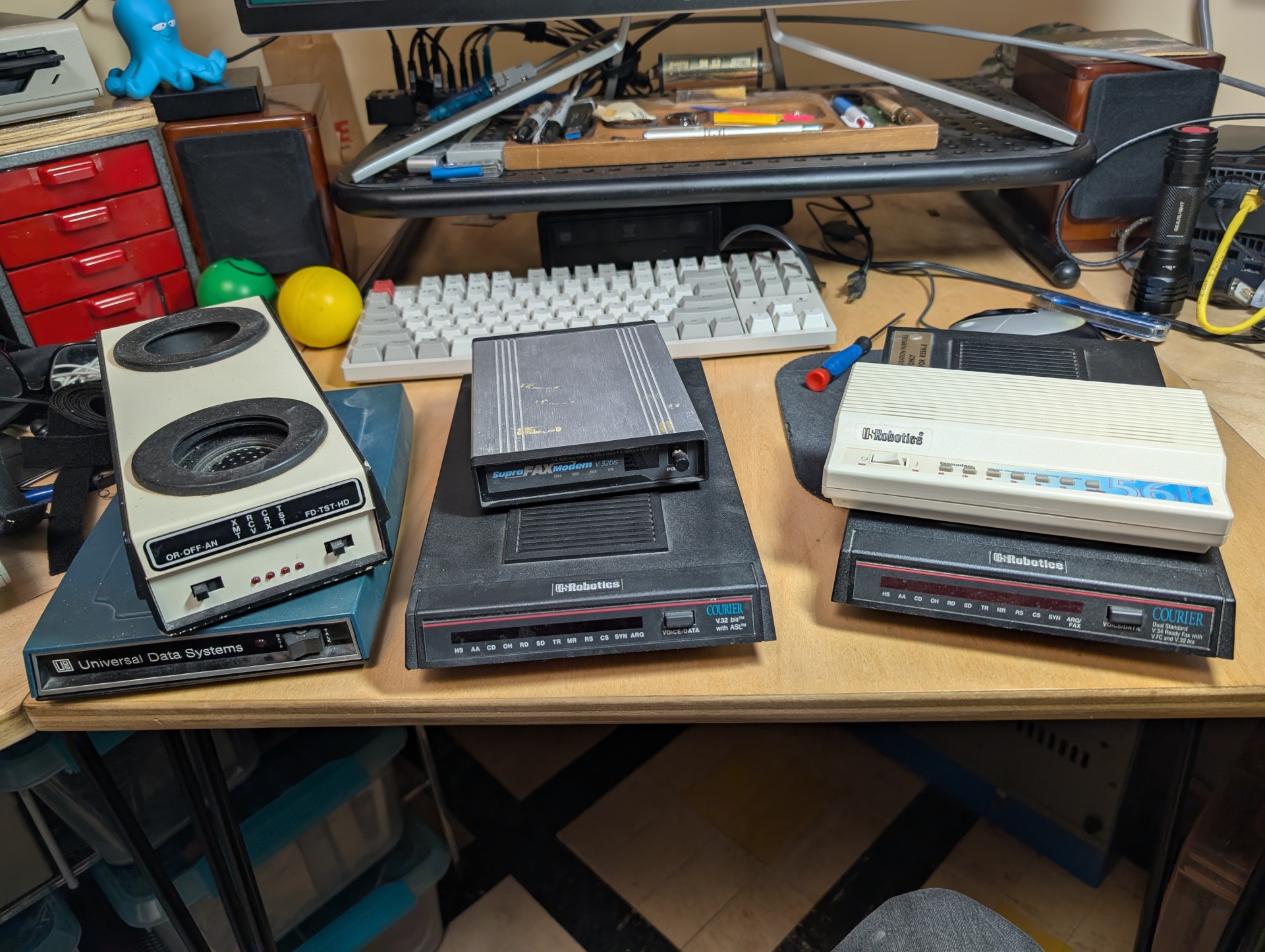
I'd love to get each of these dialing into the v.Everything or maybe a hunt group with the 14.4 Courier. I have the box and I think original basically tri-fold manual for the INMAC ClearSignal acoustic coupler. I think with the right glass terminal I could use this to dial into another machine. Unfortunately I think all the other modems I have are too new to speak the exact dialect such a terminal + coupler dingus would spit out. And now I realize the Inmac power plug isn't labeled either. I better hope these things are identifiable.
Mainly the acoustic coupler is just where I hang up my 3.5mm TRRS phone handset that I use every day.
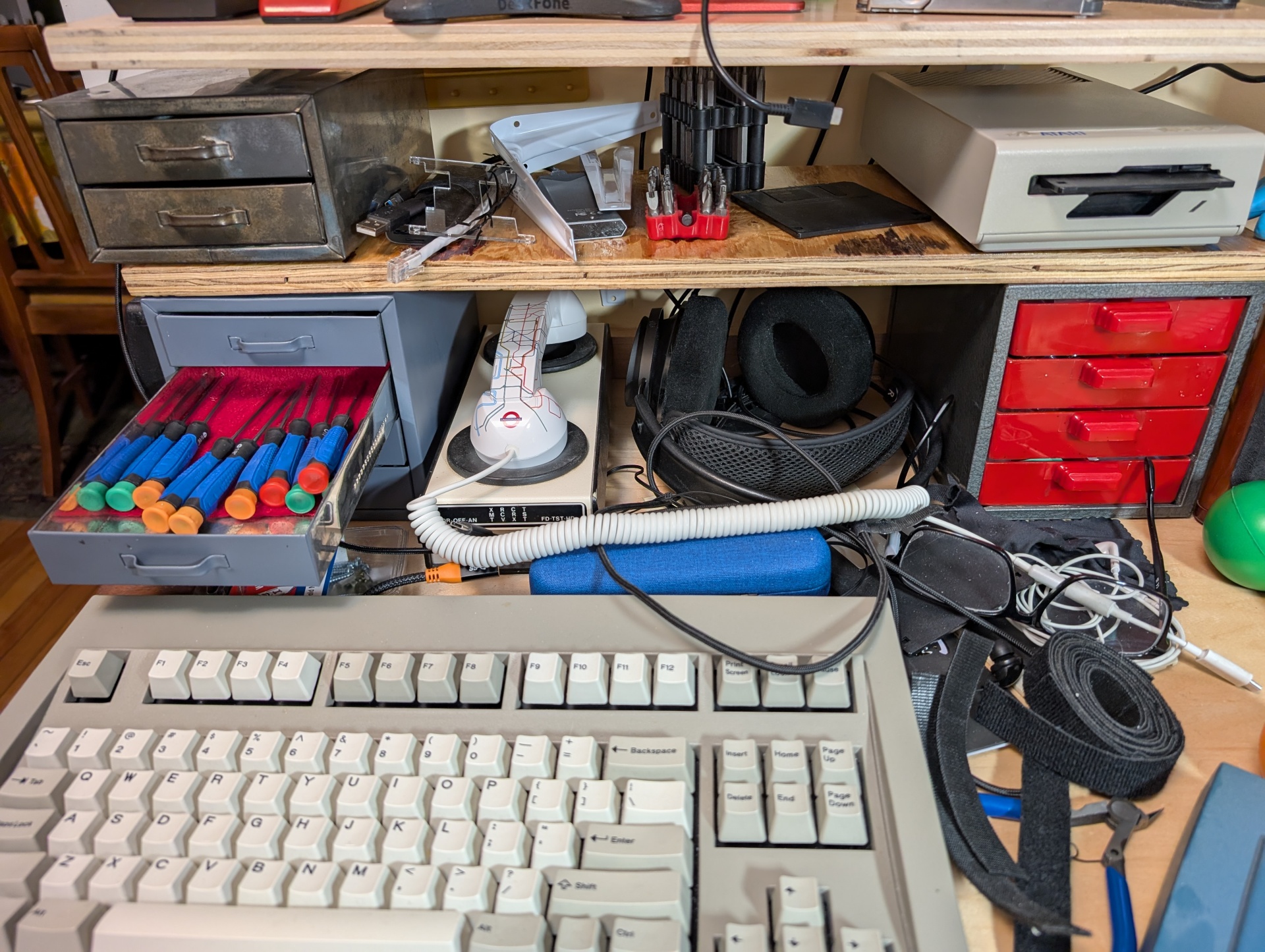
Now that I actually hold it in my hand and look at it, that Universal Data Systems box isn't a modem and now I need to look that up and figure out what that does. I was looking to see what type of power connector it has and found it doesn't have one and so whatever it does is totally passive or powered from line power from the serial port? There's two "maybe actual rj-11 jacks" on the back, one labeled TELCO and the other TELSET and a 25 pin female serial port labeled DTE.
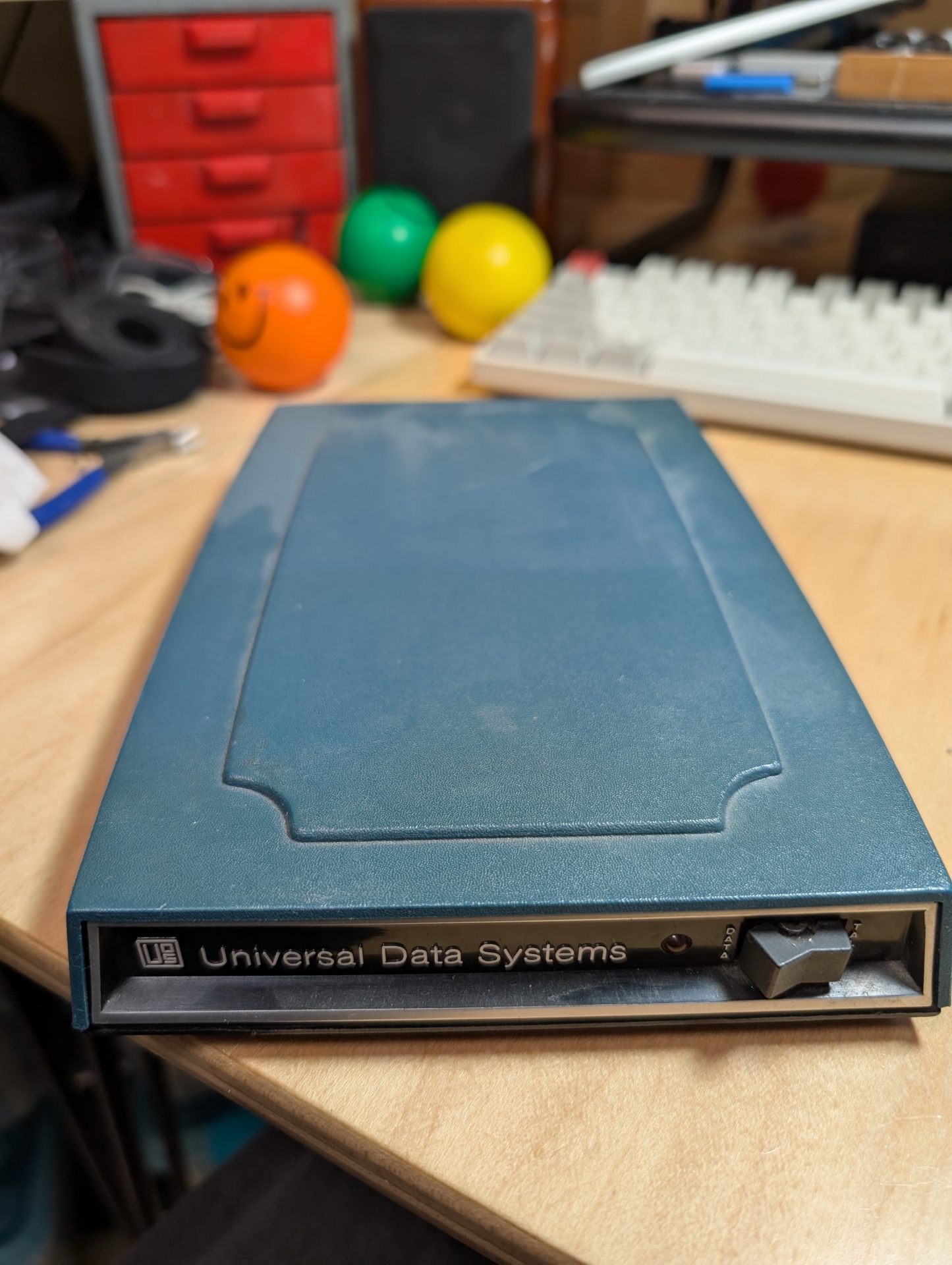
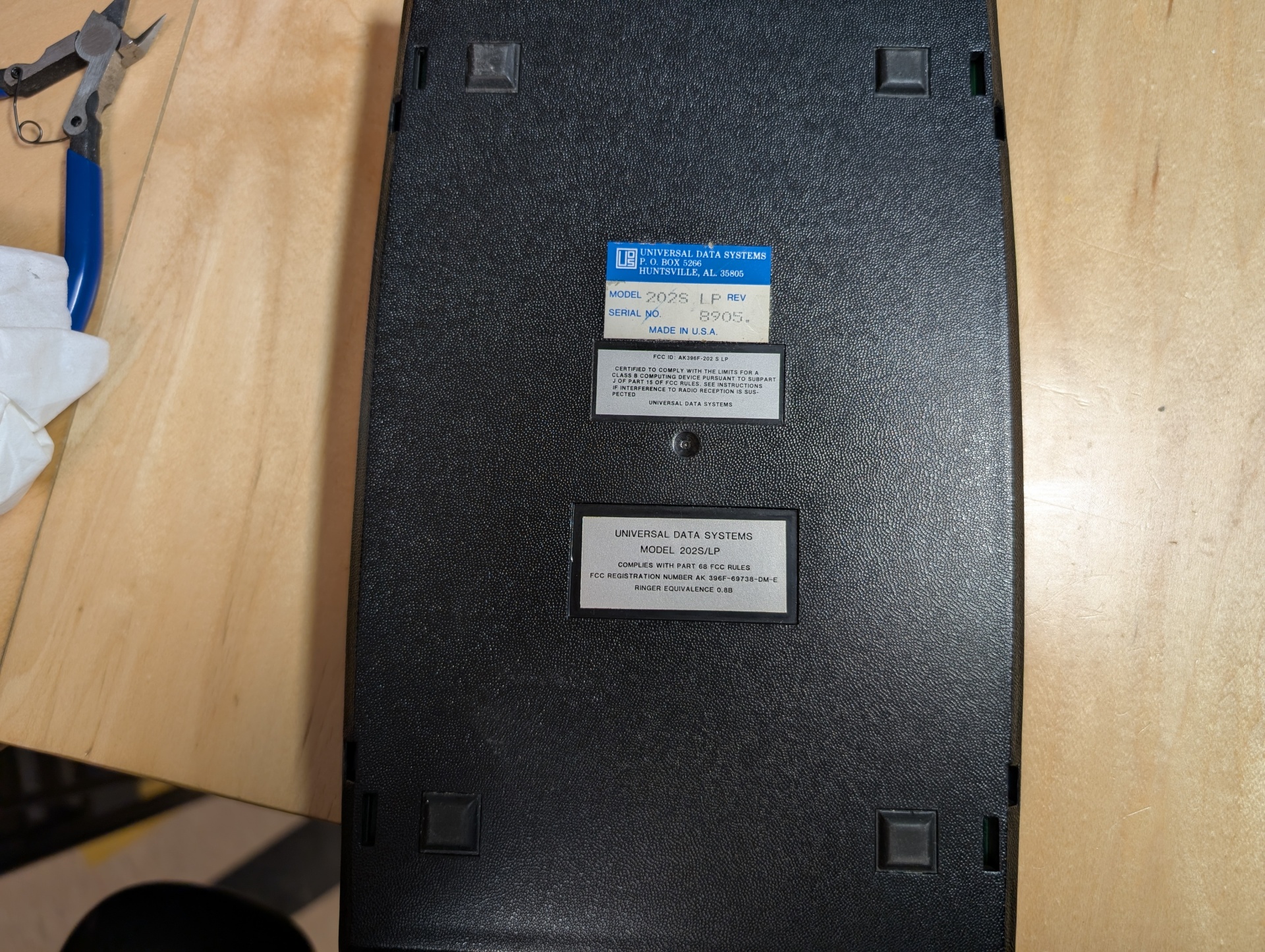
That's not the first thing in this room that I've mis-identified as a modem. Along with the Inmac, this codex SP14.4 was something I "rescued/liberated" from the computer store back room. My boss was like "blah blah serial maybe modem bank?" and so I never really looked into it. I could only find that object in a single PDF on the Internet, which was like a 1983 or 94 Motorola yearly report or upcoming guidance type document.
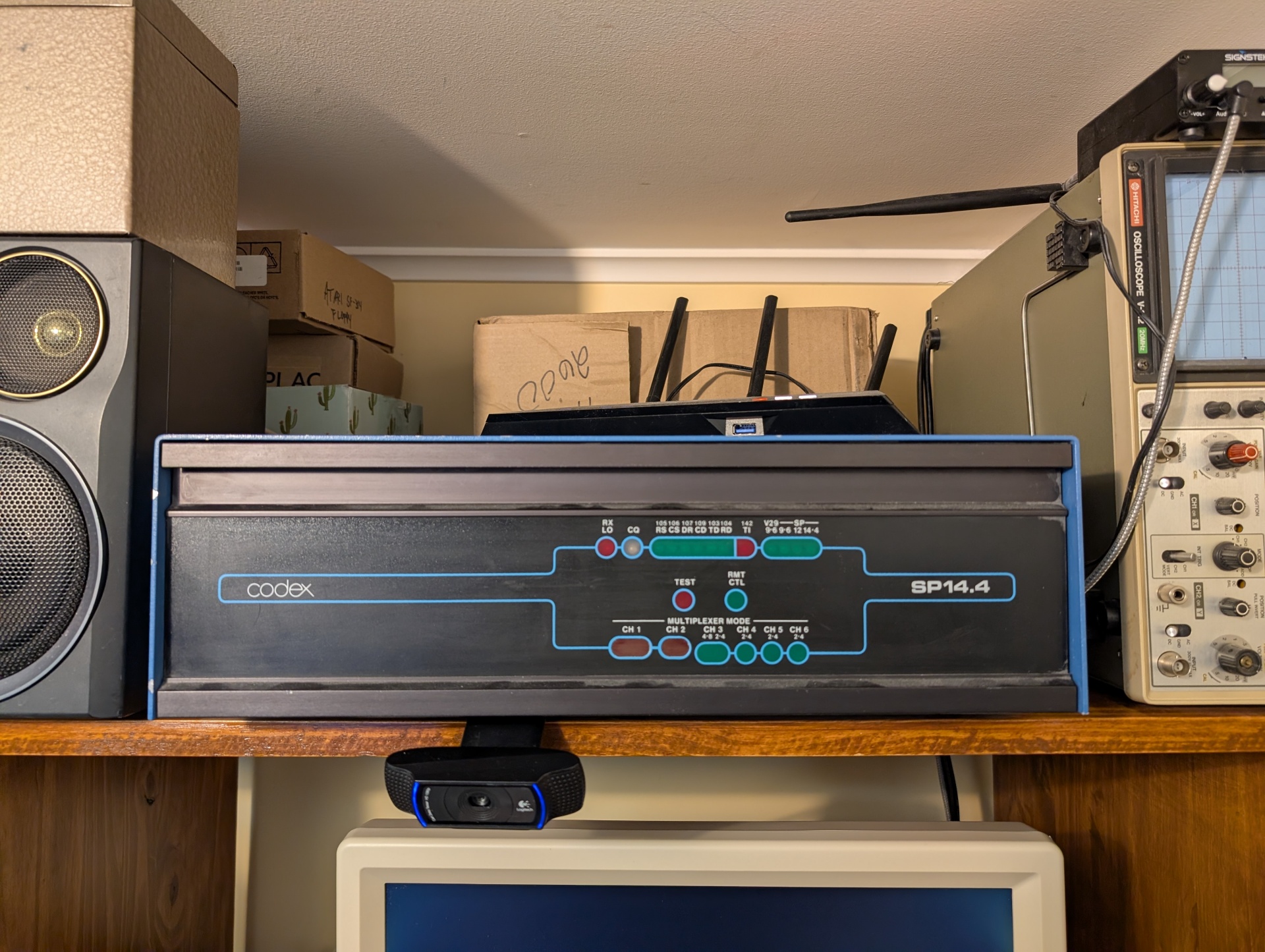
What it really is is a serial multiplexer. So you can get a total 14.4k output by binding together 6 2400 baud lines. It was in the middle of a rack full of other gear. I can't find any documents saying exactly what all that stuff was FOR. We're probably going to stuff some christmas lights, or Natalie wants to maybe build a project where we just make a little driver board so we could blinkenlights the display. in some non-destructive kind of way.
Myself personally I started with a 1200 baud J-Random-Anymodem on my Atari ST. I upgraded within a couple years to a used 2400 baud Hayes. I may have had a 9600 baud Hayes, then a Courier 9600. I had a USRobotics Sportster 14400 that I kind of hated because it felt "consumery" compared to all my previous models. From then on out I basically just always bought Pro for most things where I can in terms of workstations and laptops and whatever. It's just easier.
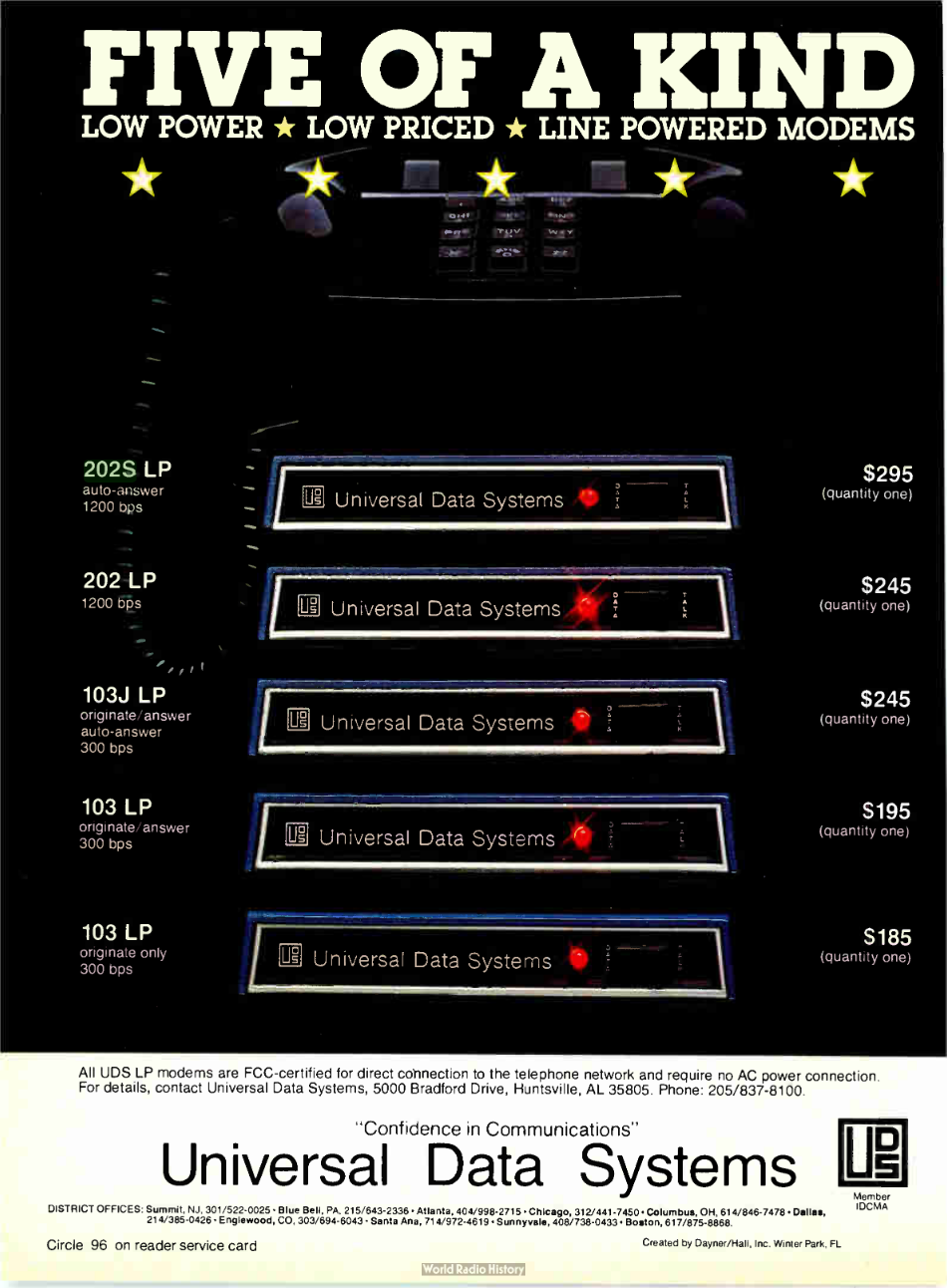
Last minute news flash. That Universal Data Systems 202S/LP is exactly what I thought it was: A top of their range, $300-in-1981-dollars 1200 baud auto-answer modem. It can probably speak to whatever can use that coupler just fine:
- xrayspx's blog
- Log in to post comments
- 379 reads