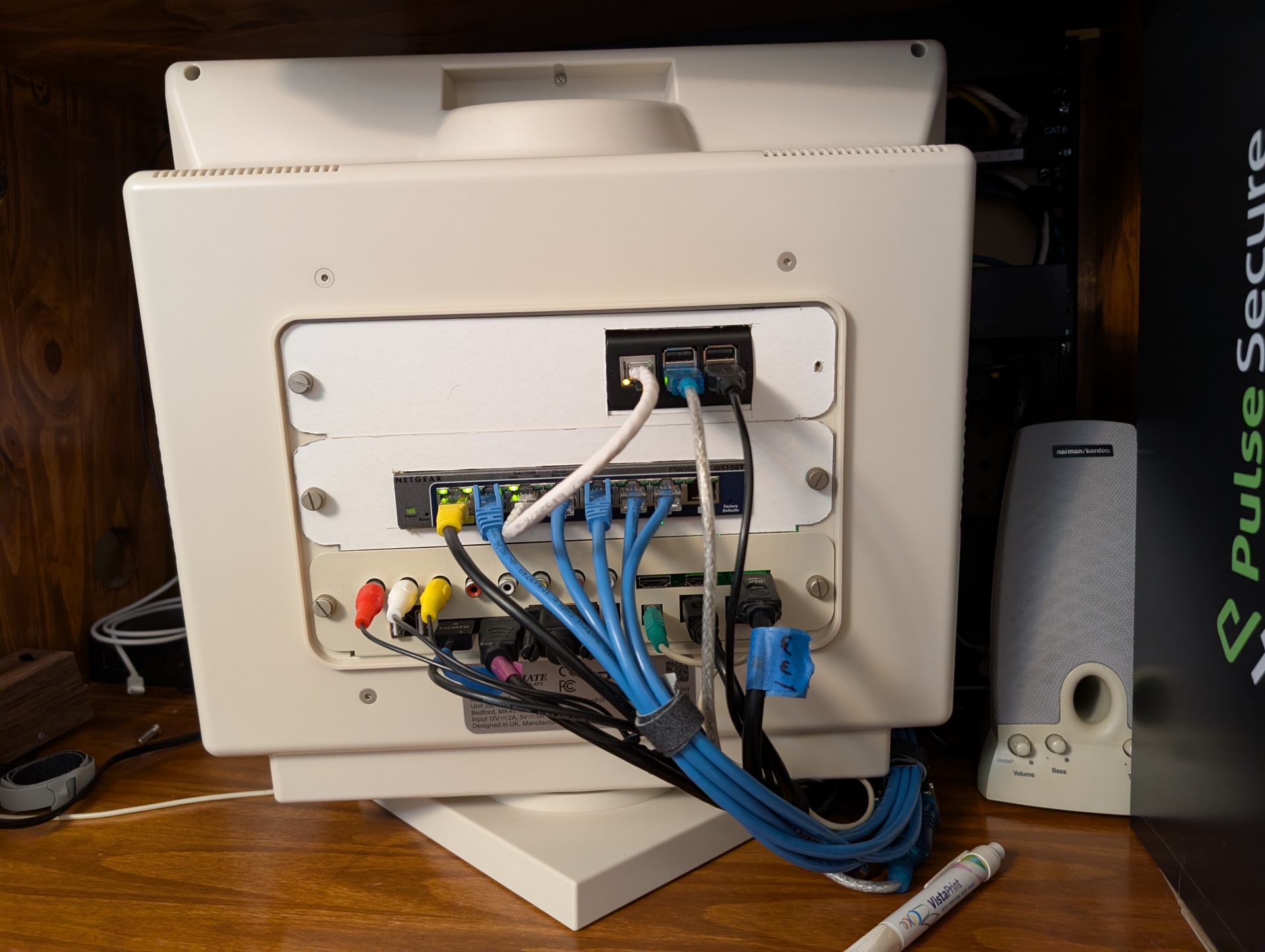
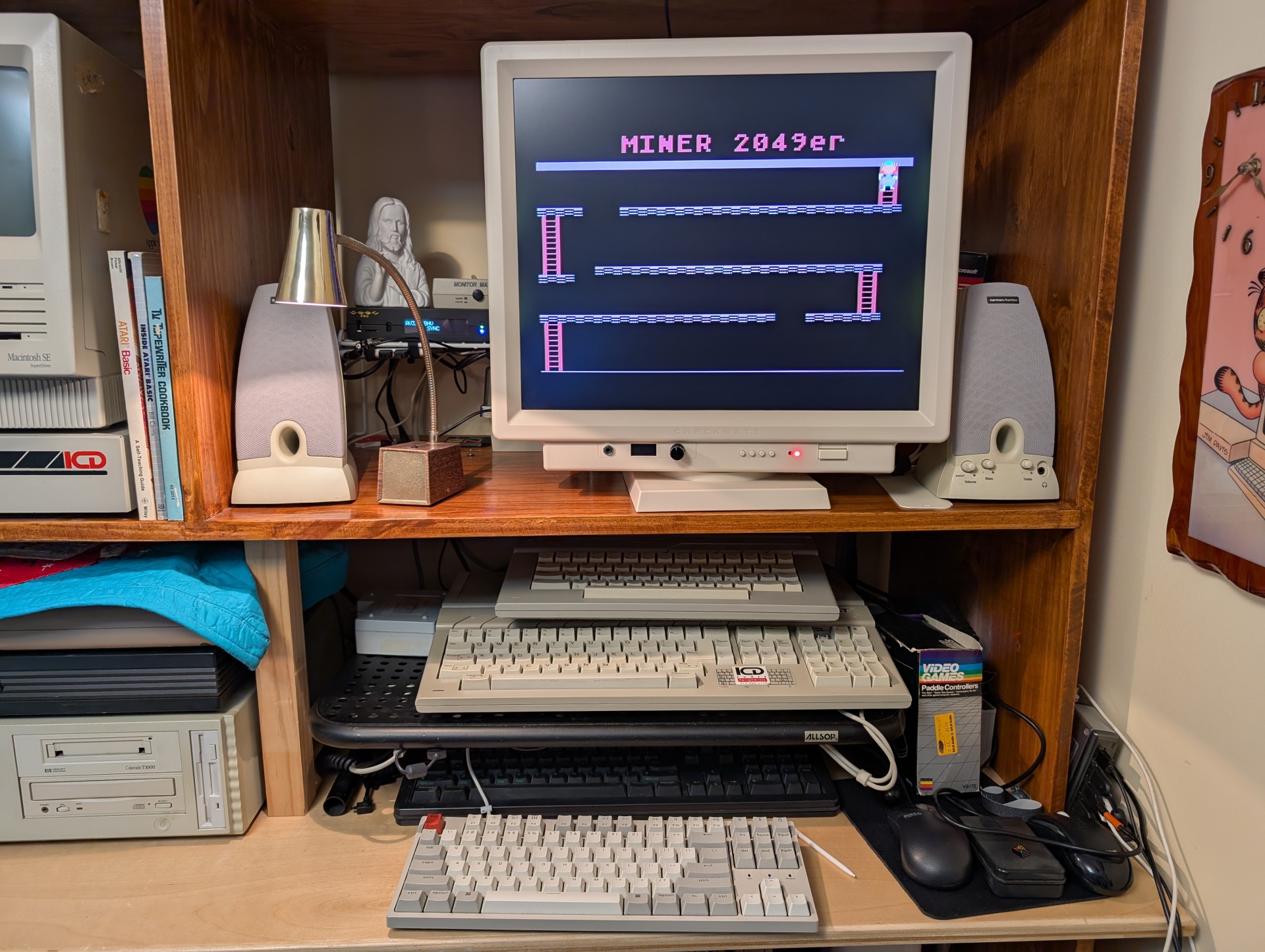
It just occurred to me that I never finished the video and walk through of the cable management project I did a couple months ago. It came out great and hasn't been a problem since I did it. Honestly I've been on other projects, but I know that the next thing I do with that retro-gear is going to be a breeze.
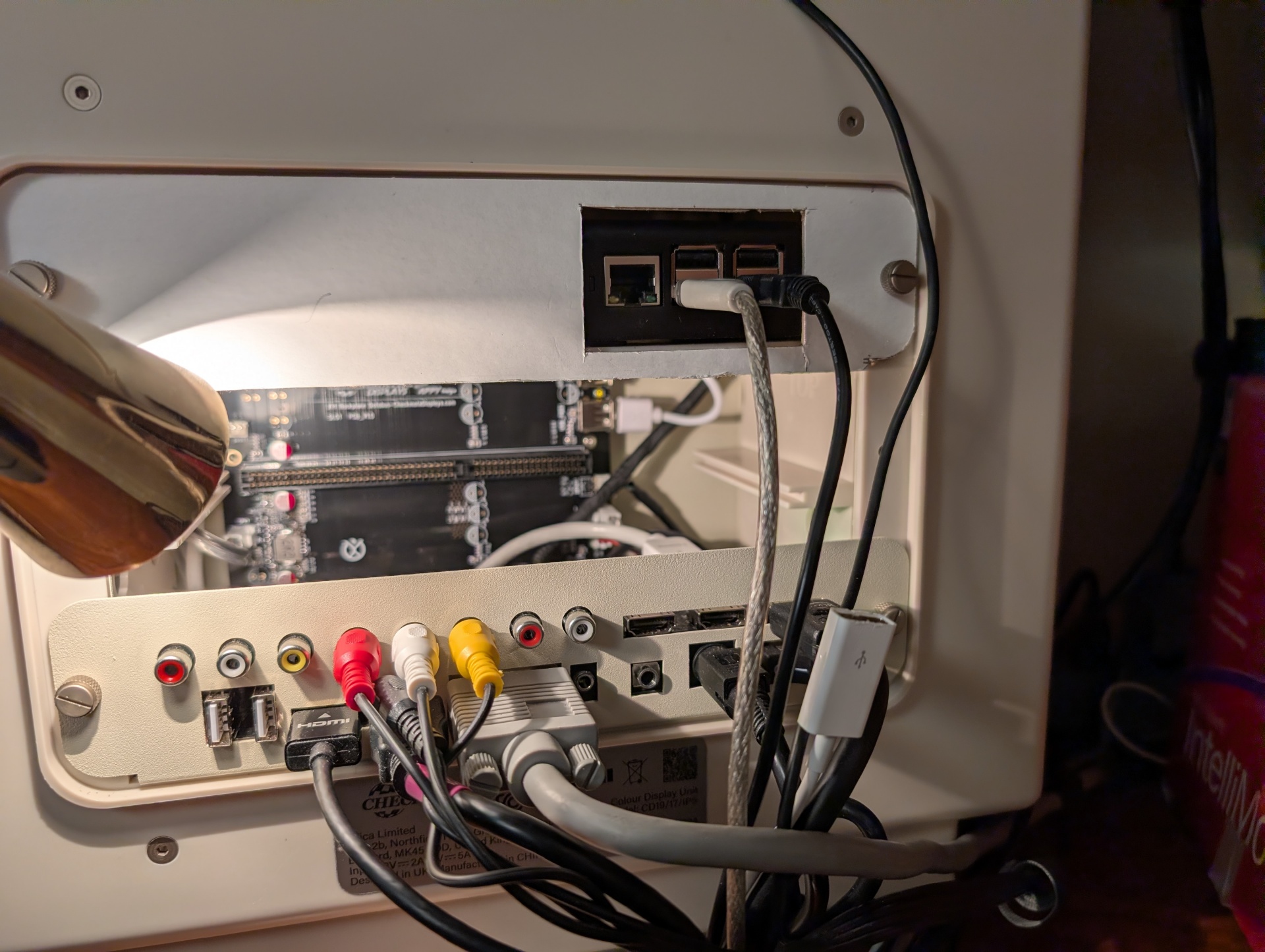
As you can see, the Checkmate spins right around and it's super easy to get at everything without putting any strain on any of the ports or stretching any cables. It's never going to win the tidiness olympics, but it's all safe and convenient and well managed. I do like some organization porn though, and this is definitely that.
Big thanks again to Checkmate for making exactly the right product for my extremely specific use case and tying this whole collection of stuff together in one easy to navigate package.
I would pay the MiSTer project money and jump in and help in any way I can to help with a "Lite Mode" UI that could be quickly picked up by say, a house guest with their only instruction being on-screen or physical info-graphics.
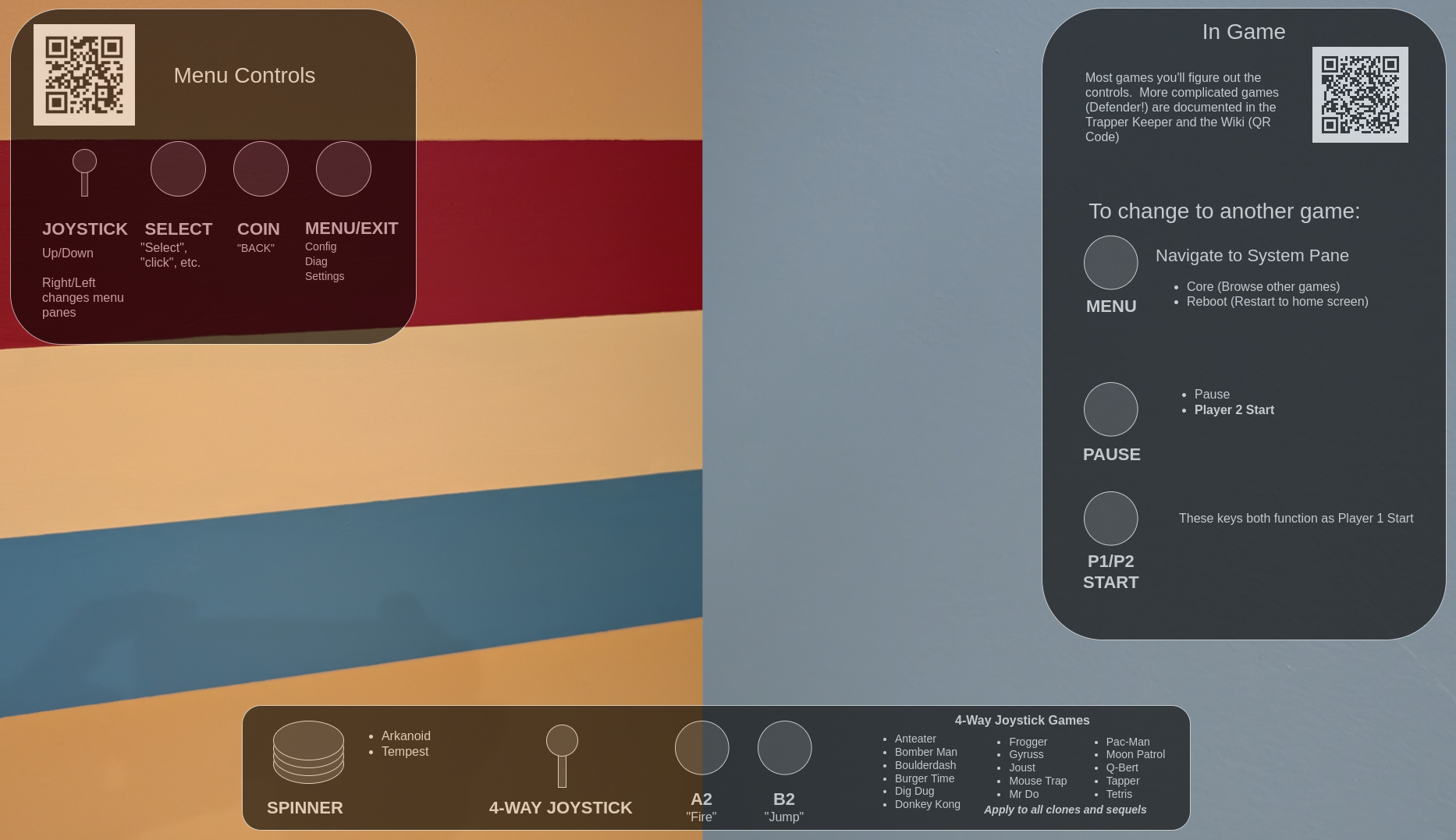
To that end, I'm making an arcade-cabinet-bezel inspired custom background overlay with basic "how to navigate" with QR code links to my Wiki for a little more detail if the user needs more specific info.
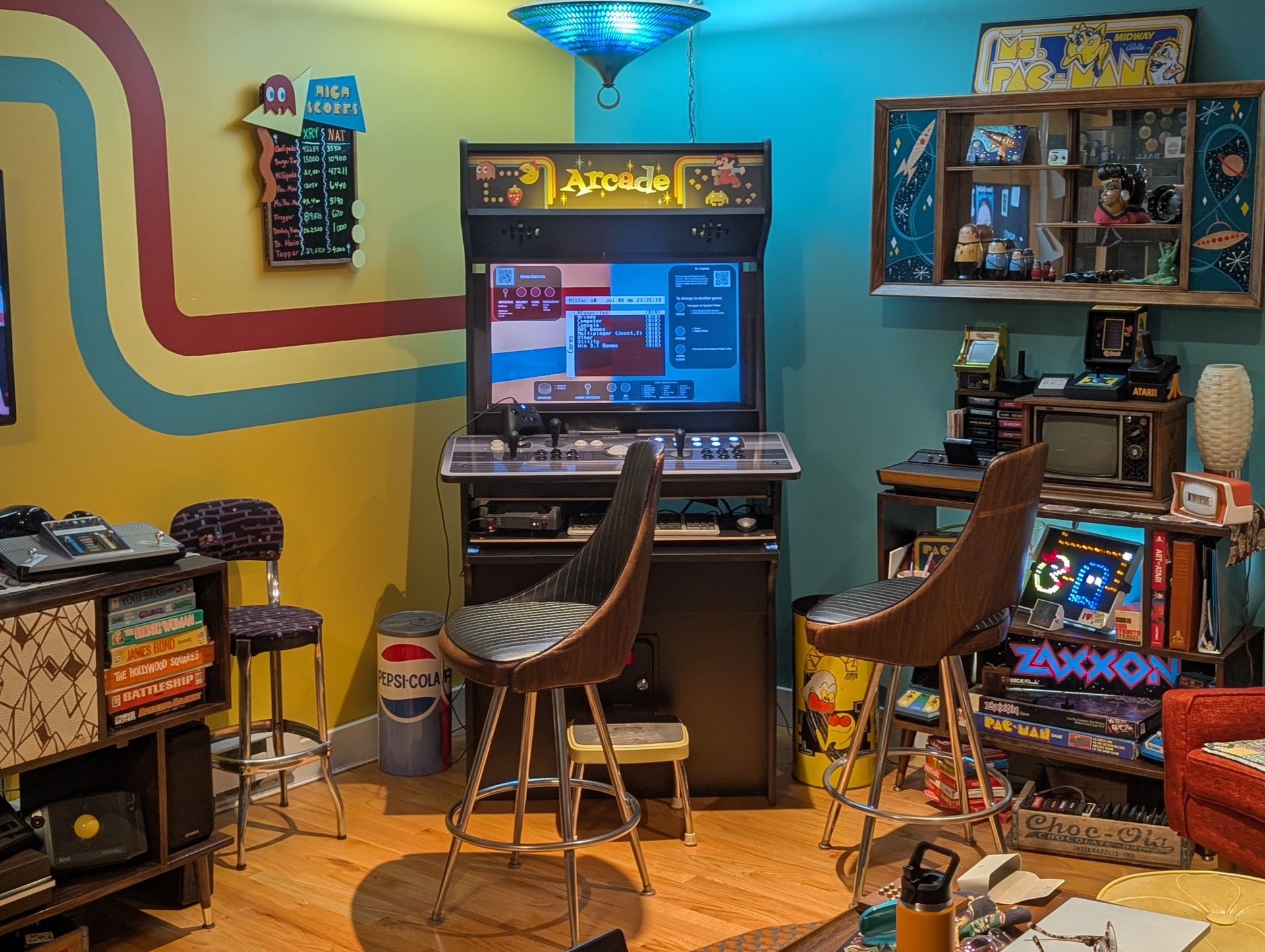
To give myself a visually consistent target I took two photos and crammed them together and have been meaning to share the result:
This effect really only works from very specific spots, but one of them happens to be "Standing at the controls".
The current running test is below. I've already got a list of things to change and yeah I promise the first thing is to remove my phone :
Sandie Shaw - There's Always Something There To Remind Me
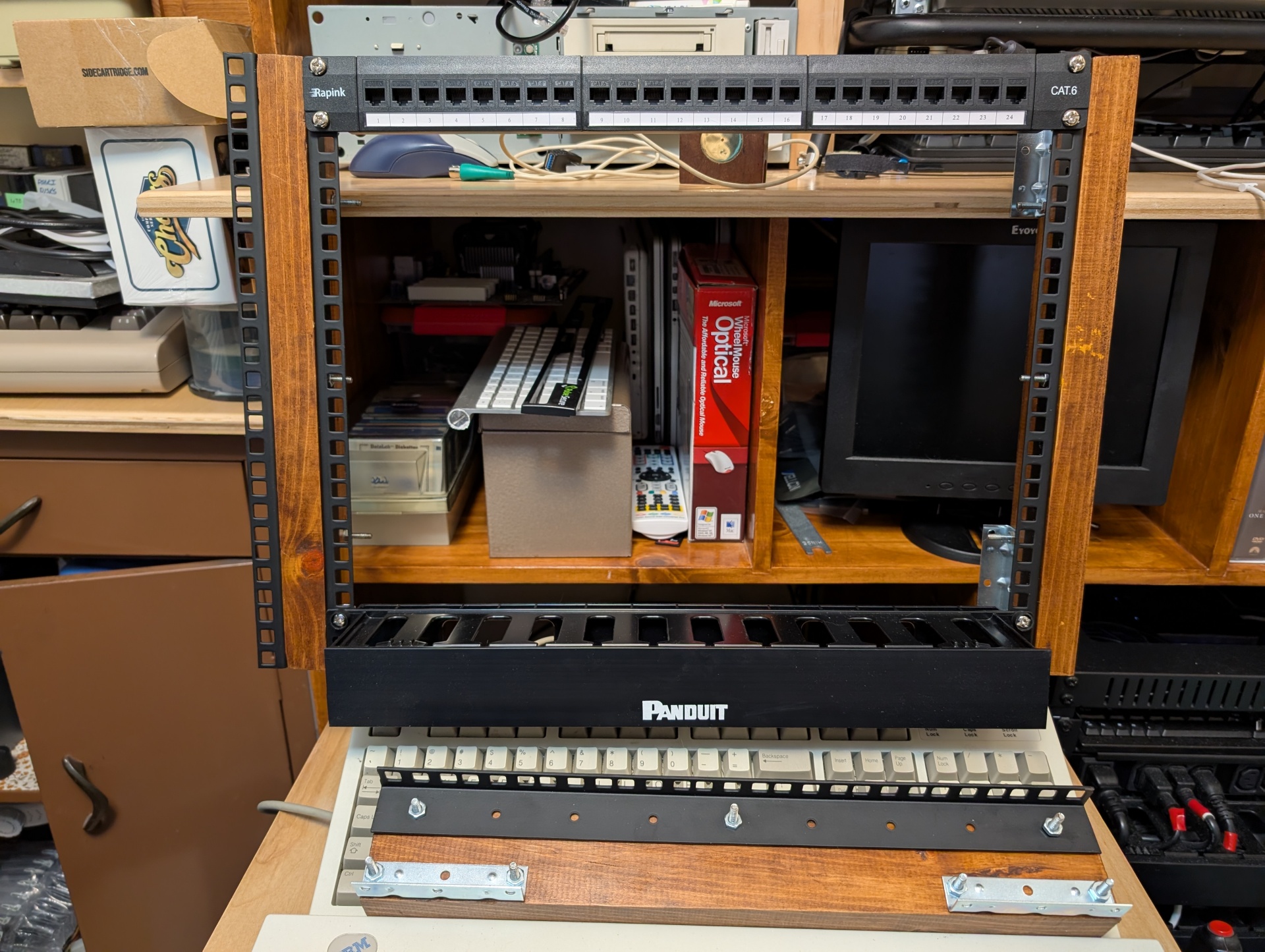
I put together the 9u rack rails today and they look great. I just used a 2x3 that we had laying around chopped it roughly to size and used BriWax to finish it which was super fast vs all the waiting around for stain and varnish.
Unfortunately it's not quite going to all fit inside the 31" wide hole I have for it. So that whole cabinet needs to come off the wall like 1/2". Which means anything we care about hitting the floor needs to go. The server racks will be just fine where they are.
One thing I am going to do is flip the bolts around on the outside two now that they're not going to be visible. Anyone sticking their hand back there deserves their tetanus. I'll put some caps on them. Maybe. I'll also carve out the middle section of each 2x3 for cable pass through.
It will also be nice to have this henge/cabinet at least loosely attached to the wall since I'll just jam some corner brackets to it. It's not unstable, but now it'll never go anywhere.
Addendum:
As I was going through my go-to box of rack stuff for cage nuts I found this one bolt that I've had forever and really want to find another one of so I can do a thing or something. It's too nice to just toss and I do try to at least match so it's not like I'm gonna ever use it.
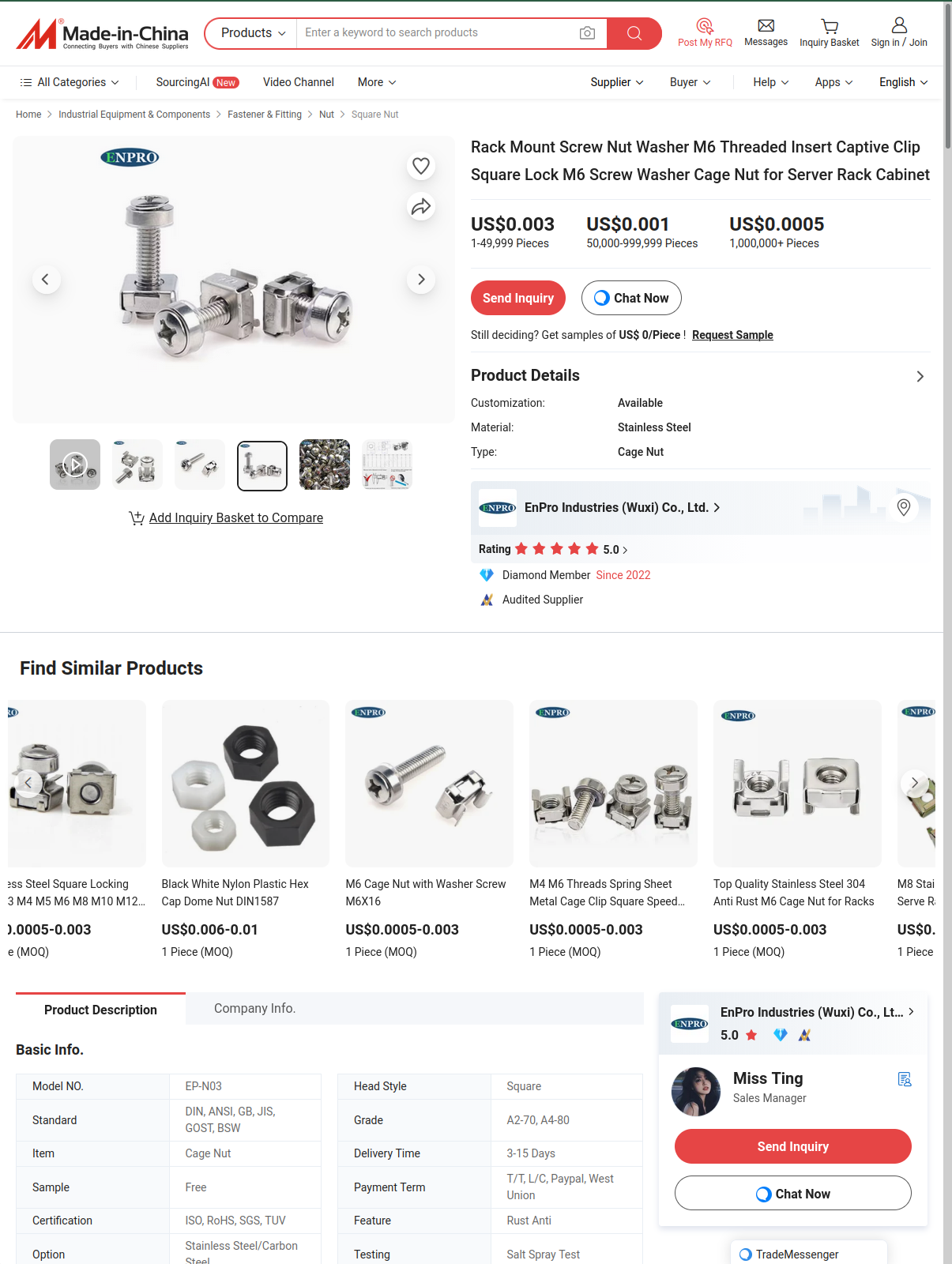
So anyway, I went hunting for captive cup washers and there are guys like turning them or water jetting them for like 35 cents a washer, which seems a bit. Extravagant. For me.
So...Sell me them. How much man, gimme a checkout page. "Send Inquiry"? I don't want 40,000 of these things. Am I supposed to chat with the sales engineer? Miss Ting? Is this page a Ru Paul movie from the '90s?
Searching for the product only ever brings you to this page, so that's cool.
In my intro to the Checkmate monitor video I mentioned how I'd love to have this on a datacenter bench and maybe throw a switch in there as well. Well now I'm going to do that.
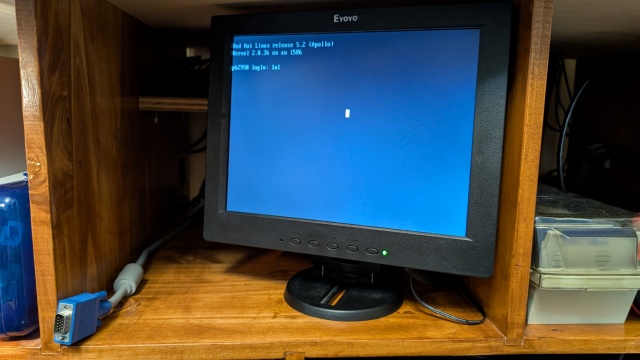
Now that I'm starting to use all these computers for more than a couple minutes once every few months it's time to build a proper isolation network. I'm beginning the process or archiving loads of Atari ST and GCR Mac floppies so I definitely want to have somewhere safe to do that work. The little Raspberry Pi 3 in my monitor will serve as the bridge, serving old and insecure protocols to that network so we can have the full '90s experience. So it's listening on Telnet and FTP to host archives of all the NeXT software ever made for instance. I'll be dialing back Samba security to the point that a Windows 3.11 or 95 machine can connect to the fileshare. The Pi will also provide the WiFi network for exciting things coming up like my FujiNet cartridge that I haven't even tried to play with yet. I will very likely move DHCP and DNS resolution from the default gateway to the Pi just so I can pick the whole thing up and take it places. Plug devices in and they'll be able to get an address and browse by hostnames and stuff.
It's so nice to have an all-in-one solution and I'm happy to stick a little PoE powered switch in the Checkmate to provide the networking for all of it. This monitor is now a "pick it up and go" solution to demo a wholly contained network of 1980s and 1990s machines where no one can hurt them. If I went to things like VCF, this is what I'd bring to run my whole table.
That monitor is going to feature in a lot of my stuff in a big way. Every time I do a project I find a new use for it! Running desktop computers through multiple VGA switch-boxes? Still looks great!
Again, sorry for the "beginner" nature of all of this but I'm playing with kdenlive and learning how to speed things up and make short clip montages, so you can watch me suffer as I learn :-) It's basically 1978 PBS, WTF do you want it fits my entire aesthetic. Look where I live.
Stay tuned to see my friction-free and more importantly secure way of interacting with all these backend systems. Coming Soon!
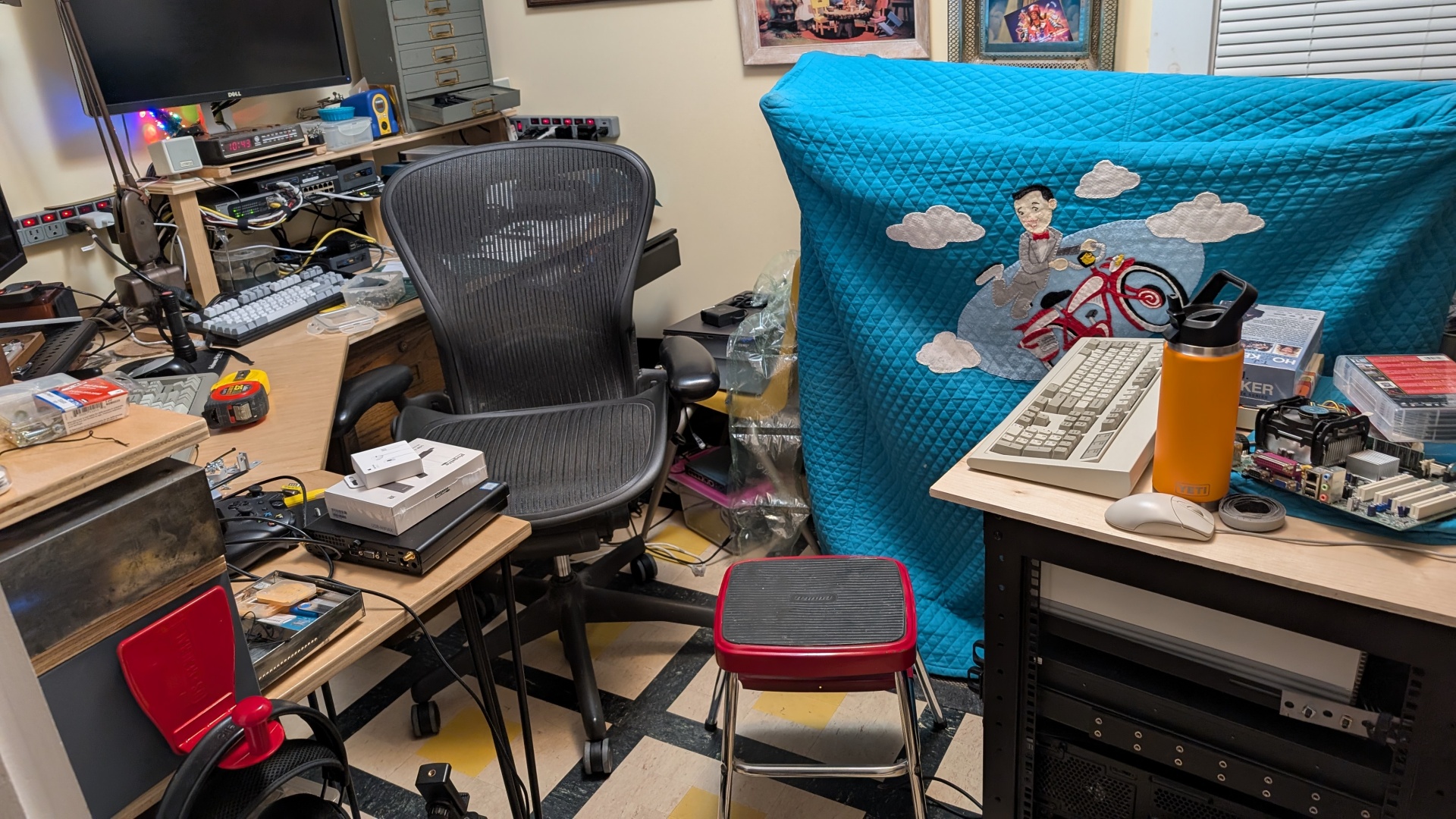
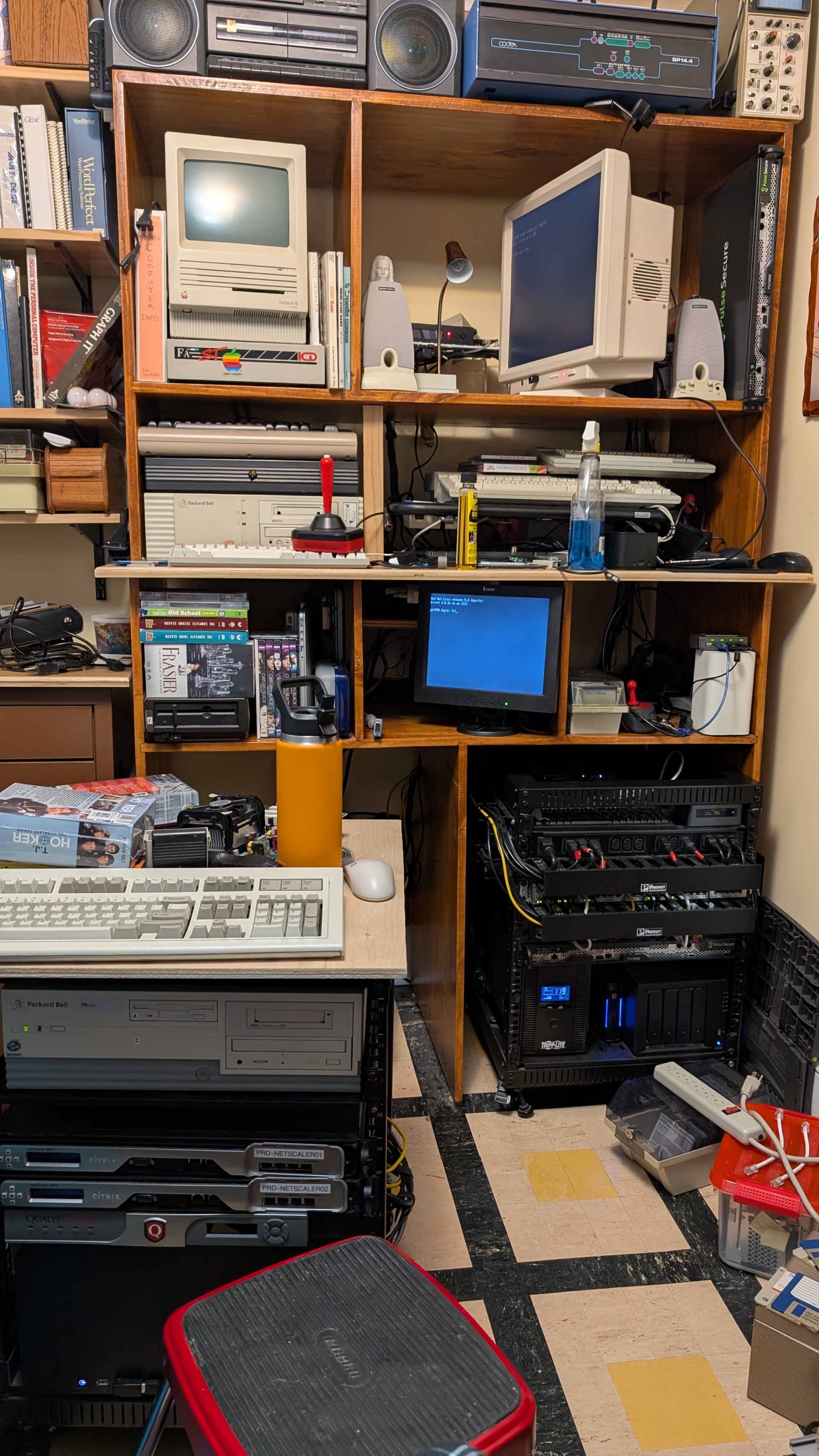
This is what it looks like when I do every single project all at once. When I do one thing, but that depends on 5 other things so it explodes the office! I love this. A person with training might call this a "manic episode" but I choose to say I'm super excited and motivated. Basically I've been sitting in this office for 10 years saying "When I have 10 minutes to think, I'm gonna...".
Well today those things were:
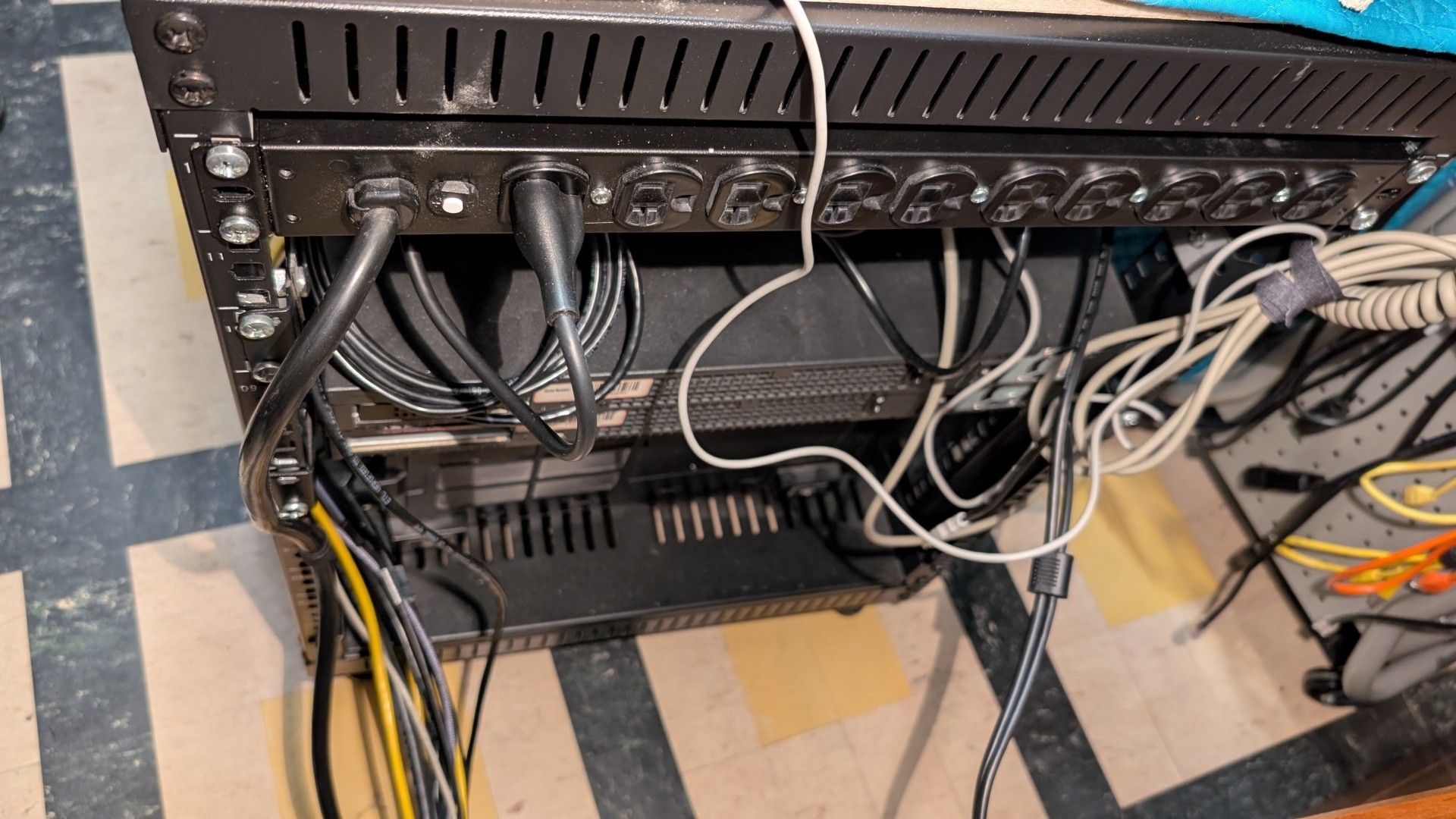
Re-cable the henge and fix everything ugly. That largely happened today.
Put in a shelf and clean up the mess that is this VGA switcher and cabling (NeXT + 2 PCs)
Put non-UPS in-rack power in that one rack for non-essential machines
Re-think my desk/workbench side of things and cable everything up tidily
Doesn't look tidy, but believe me it's really clean under all the mess!
I'm going to stick some Panduit under the new power strip and tidy up all the 9' Model M cable, I'm doing a longer VGA cable right now:
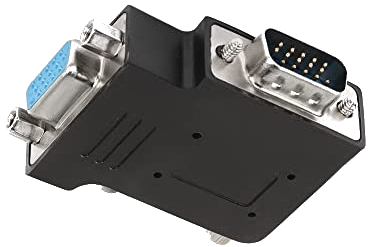
That bin in there has one of every analog A/V cable, adapter and dingus. There are lots of angled and shorter cables coming to clean that up more. The black thing is the NeXT station breakout box for VGA, sound & keyboard. The VGA cable on the left is for stuff I want to plop down and work on like a 1u server or a PC or laptop. I have two P4 PCs that I've never even powered up because doing so would be a hassle, well Hassle No More! I have a bunch of rackmount stuff to build to replace this unstable webserver. I'm going to start with one and work my way up to two servers splitting the load here.
This one might be sort of tricky. Hey Natalie, do you guys sell anything we could like taste test in the store? Maybe I should email the lighting place like what we used to do back in the before times.
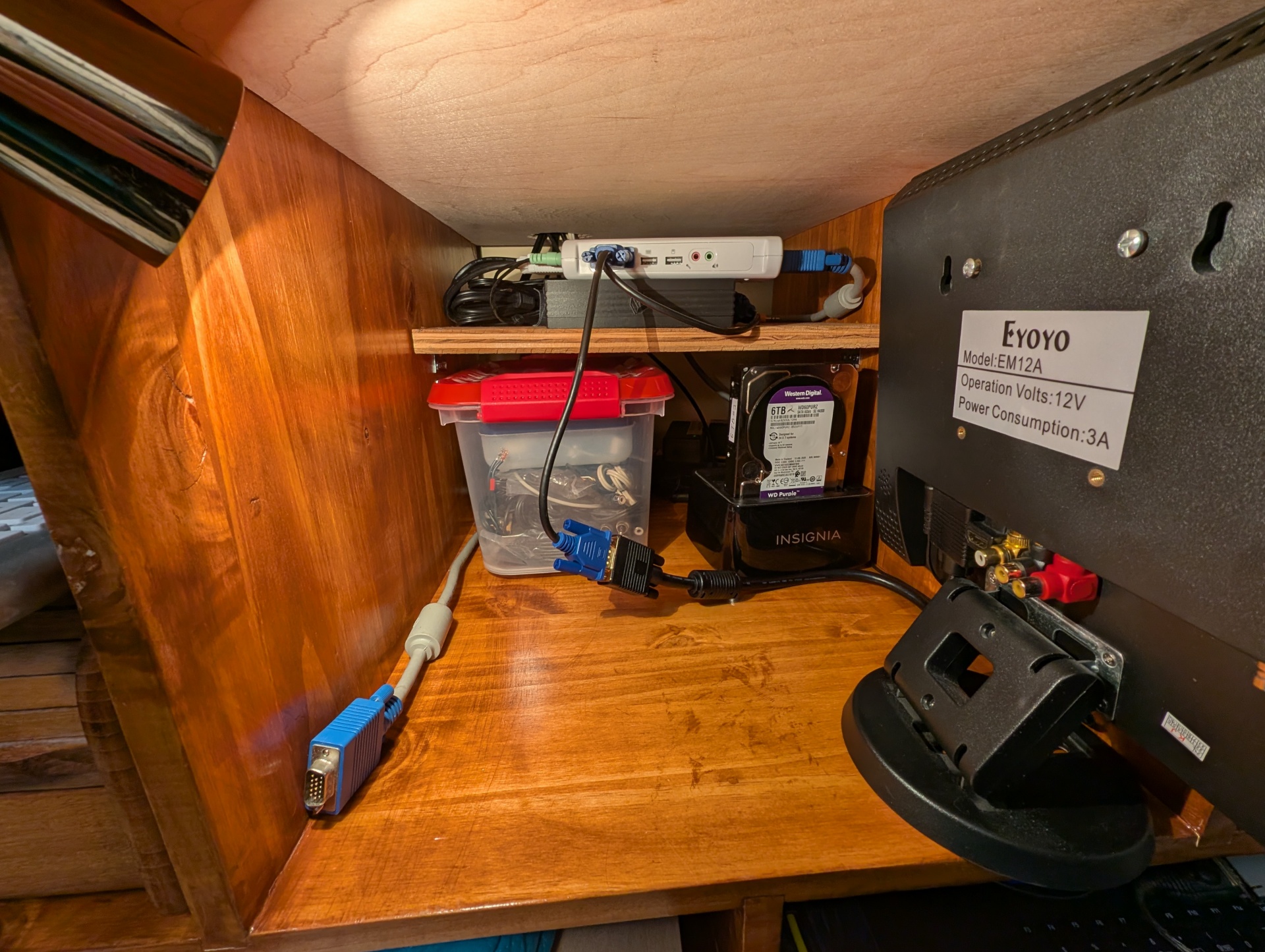
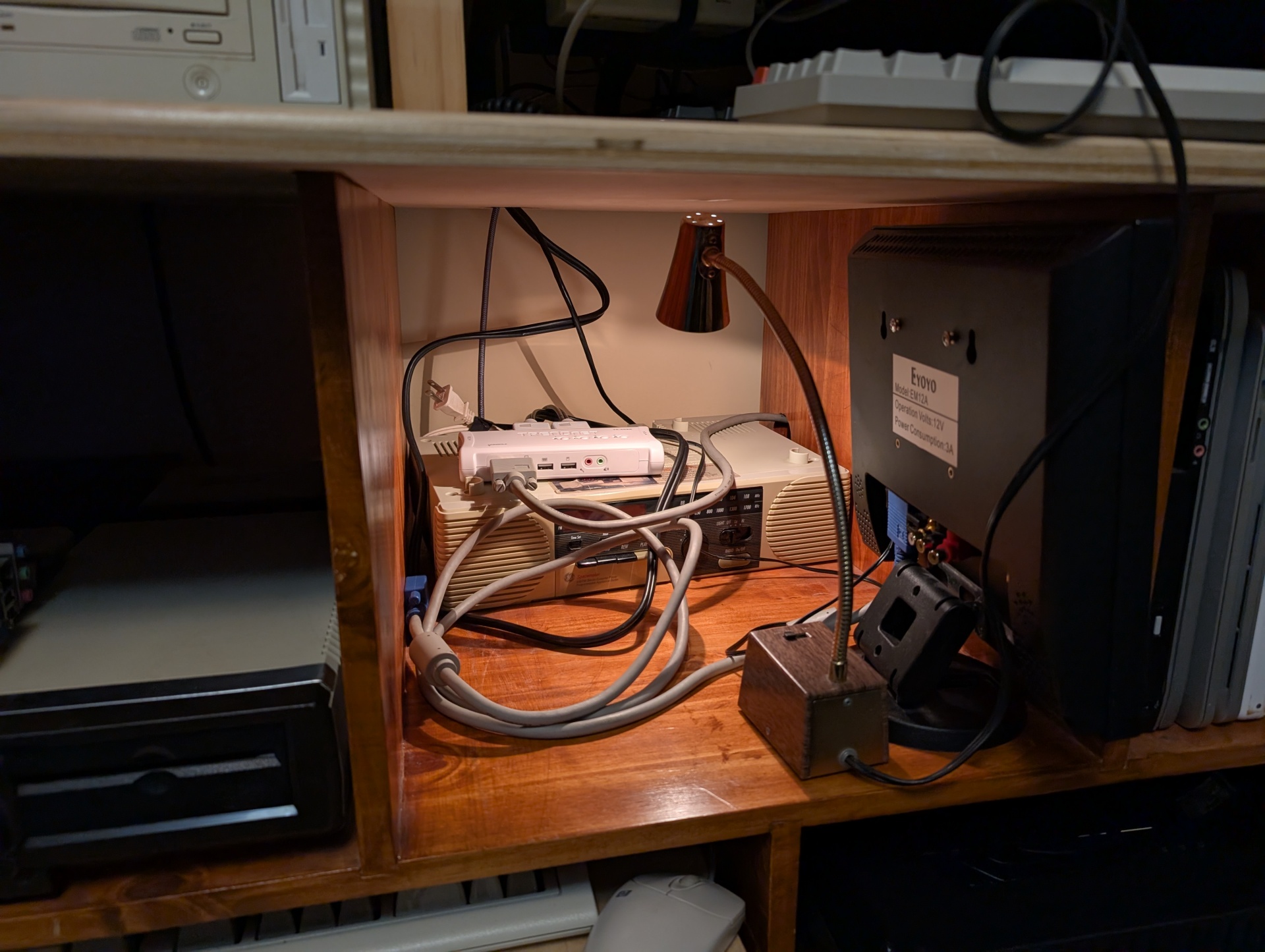
I'm building a shelf in this cubby to hold that super un-weildy VGA switcher. It's awesome but I would have paid triple the price for just 5 ports in a row rather than this octopus nonsense. It was $30, what do I want.
I need to mount that radio too, it looks super cool. I'm also going to make that the home for things like the NeXT VGA breakout box and hopefully the first USB keyboard and mouse dingus they sell. And a bin-full of adapters and "general retro-ey converters and plugs"
So I have this vintage brass and painted woodgrain gooseneck lamp which is awesome looking and so perfect for exactly what I need it for. Imagine sticking like a flashlight on its end pointing up vs this thing. But hoo man this thing's going to burn my house down like that bulb gets scalding hot within a minute or two.
These are 12V bulbs so that base has a transformer in it that gets nice and warm but gives switchable low/hi which is nice. It uses GE 1156F bulbs, which are like automotive backup lights or in a garage door opener. So I want like a modern LED equivalent that is going to look warm and nice like this thing but searching I don't think I trust buying anything I don't see with my own eyes first or someone personally vouches for. Whatever it is I'm not buying four of them for $10 without seeing them lit for real with my eyes.
I want the pleasant light qualities of a 60 year old incandescent light bulb made for one of like 2 "warm ambient light" scenarios for this bulb.
I'd pay $20 for a single bulb if I knew it was exactly what I wanted. I'm sensing a theme in this post.
The Disposable Heroes of Hiphoprisy - Television, The Drug of the Nation
For a year now I've had a Checkmate 19" 4:3 aspect ratio monitor, and I want to show how that's getting used. The reason I kind of sat on it for so long is that I got frustrated, then depressed and spiraling, and finally decided to fix things and spend myself out of my problems. For Health! And here we are, fully working solution, I'm super happy.
I've seen these monitors start showing up in videos from folks like Nostalgia Nerd and Modern Vintage Gamer, but I haven't seen them really exploring it so I want to share some of my favorite use cases. And with my upcoming sabbatical I'm planning on doing a lot of projects involving the machines you'll see here so I wanted to kind of intro everything before I get started on those.
So let's go check it out! (Caveats: I am not comfortable making videos, and I'm not good at it. I didn't edit out many of my "behind the scenes" bumbling because if I have to figure it out, you have to watch me figure it out! Hopefully you find my awkward bumbling "charming")
TL;DW;
The Checkmate is not just a monitor, it's also an integrated electronics project box, 2u mini-rack and hacking platform.
Basically as I said I ran into one or two semi-issues. The 15Khz horizontal scan rate thing on the VGA port was a real bummer and sent me down a hole, but the OSSC Pro worked out great to help solve that, even though I really don't understand that thing at all. It looked like shit for like a month and just through random button-mashing I got it to work great for both mono and color on the ST. Thanks to CTRL-ALT-Rees for the in-depth review of the OSSC vs RetroTink video specific to the Atari ST platform. If I ever get up the courage to do a factory reset on the OSSC I'll try and document exactly what settings need to be twiddled to make this work in my case.
Thanks again also to BackOfficeShow for leading me to the realization that converting ST to VGA was all just a simple passive "hook the wires to the other wires" process which inspired me to do my Monitor Master hack!
Future projects and other use cases
I do want to see if I can hack a GoTek in there to use as a drive on my ST with the rotary encoder in the monitor. That would be about the slickest thing imaginable. I'll probably get a GoTek with an encoder and try to remove that one and use the monitor one instead.
There are 12VDC headers on the backplane board. Can I wangle one to a barrel jack and mount an 8 port switch in here? I have a couple of 12v@1A Netgear GS108T switches and I'd love to see if I can pull that much power and have a little self-contained network. This is pointless. The Pi in there is just on WiFi, but I kinda want to see.
My most recent job ships cases and cases of hardware to healthcare trade shows. Much of the network hardware for the booth and even small PCs for running demos could easily be securely fitted into a Checkmate with the HDMI out going off to a big TV.
Portable industrial control and automation platform as a self contained control station again with several SBCs and integrated network switching
I'm a network and datacenter-ops guy who naturally looks at everything through that lens. If I were building a crash cart or repair workbench I'd love these just to fill with low power SBCs (Pi 3 works great) and switching for a portable KVM, isolation network and test suite.
While they're not "cheap" for a consumer product, thinking in terms of even small-scale datacenter hardware they're an absolute /steal/.
Other Quirks
I did run into a race issue with the Raspberry Pi as well. I think it takes a bit for the monitor to be fully up and ready to receive video as it starts up. At first I thought it might have been an inrush current type thing, but I think it's just that the monitor isn't "up" yet when the Pi starts shooting out video.
When I'd boot the monitor cold there would be no video until I unplugged and re-plugged power to the Pi. To fix that I added a 10000ms delay to /boot/config.txt and it works great:
boot_delay_ms=10000
To give you a sense of the depth of my personal psychosis, the other issue I kind of have is a ridiculous future-proofing one that is bonkers to even be worried about. There are 6 HDMI inputs on this monitor, but only the main one is directly addressable through the front-panel buttons. Using the front panel, you can switch between HDMI-1 and one of HDMI-2 through HDMI-6. To select between HDMI-2 -> 6 you must use the remote. You can kind of see me do this in the video.
From what I can figure out this of course makes total sense. The UI firmware of the panel, like the off-the-shelf stuff that is the same as the EYOYO monitors, knows nothing about the riser card with all those extra ports on it right? The firmware knows about two ports. The external HDMI-1, and an Internal HDMI that the mezzanine card plugs into, and can select between them. The remote therefore isn't interacting with that COTS firmware to do this, but instead it's controlling the mezzanine card to switch the input among the other 5 ports, which is a very neat way to work around that. I mean obviously the firmware can select the riser card ports, because that's where the composite inputs live as well. If I had to guess it "only" had code to handle two HDMI inputs, so this workaround was implemented.
That's obviously a totally rational way to do this, and really the only way you probably can. It's awesome. My "planner" brain is just saying well, what about in 30 years when that remote is dead or lost. How do I select those ports?
For all I know I can control that mezzanine card totally in code over GPIO from a Raspberry Pi, or serial, or LIRC (which this probably is). Who knows. That's Future Guy's problem. I haven't even dug into that, but I certainly intend to! I want to see just how far I can push this.
Greetz and Links
Checkmate1500plus.com for making an excellent project out of total engineering passion. Excellent work all around to Steve and Appy and the rest of the team!
BackOfficeShow.com for showing how easy it can be to convert ST to VGA and switch between mono and color.
Natalie took this video a few years ago at Funspot in Meredith. I have been obsessed with this cabinet, like probably this exact cabinet, since I was 12 or 13. I remember when they had a whole row of Out Run standup cabinets too back in the day.
I think I did much better on another visit, after the machine was moved somewhere else but I dunno where that video is. I think this one is over by the mini-golf course. Either way, I'm not great at hydraulic Out Run, but that's not really the point is it?